[Ropac] Frieze LA 2026 Preview
![[Ropac] Frieze LA 2026 Preview](/art-research/archive/ropac-frieze-la-2026-preview-page-0005.webp)
Source text · Page 1
Frieze Los Angeles 26 February—1 March 2026 Booth D04
Source text · Page 6
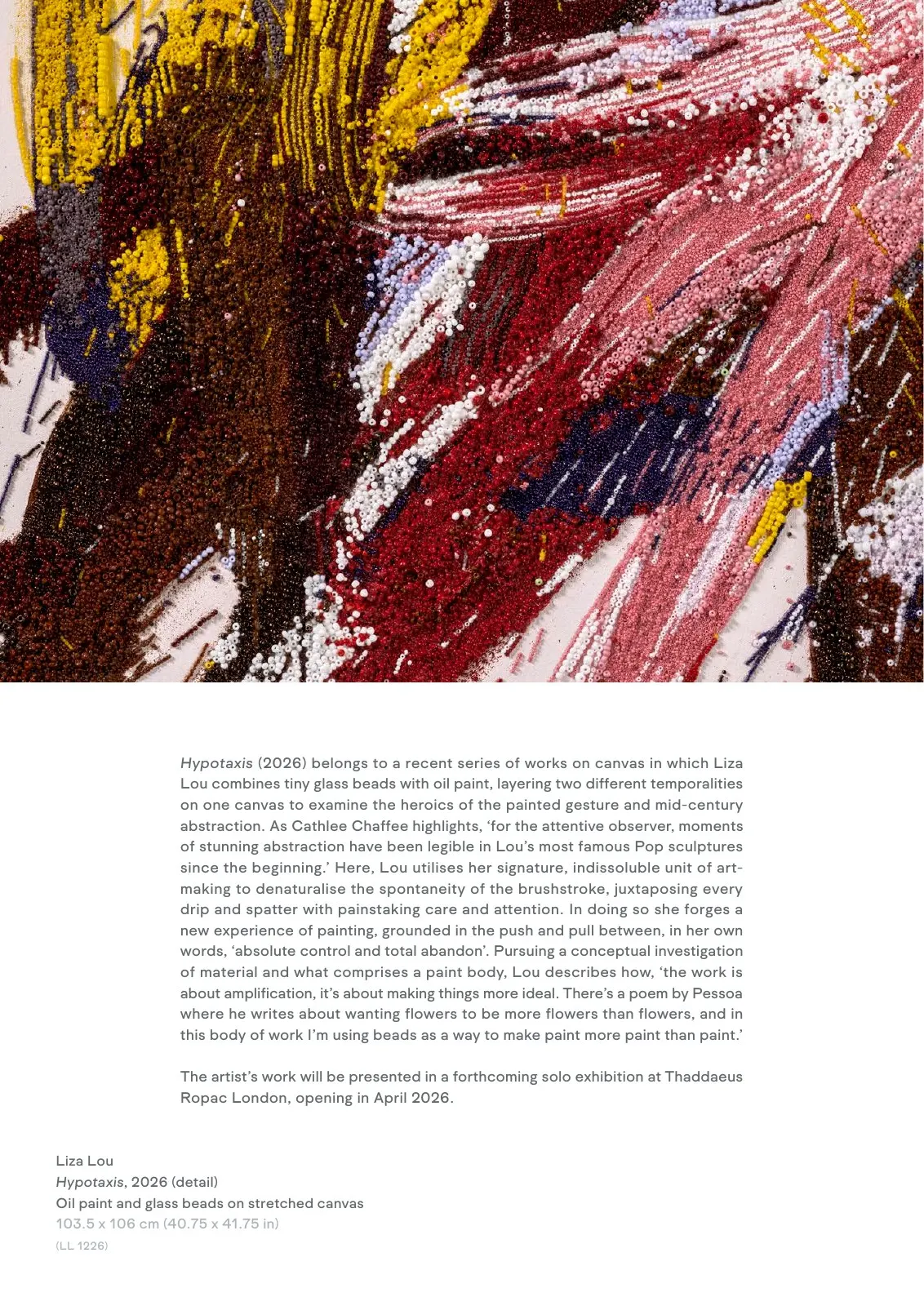
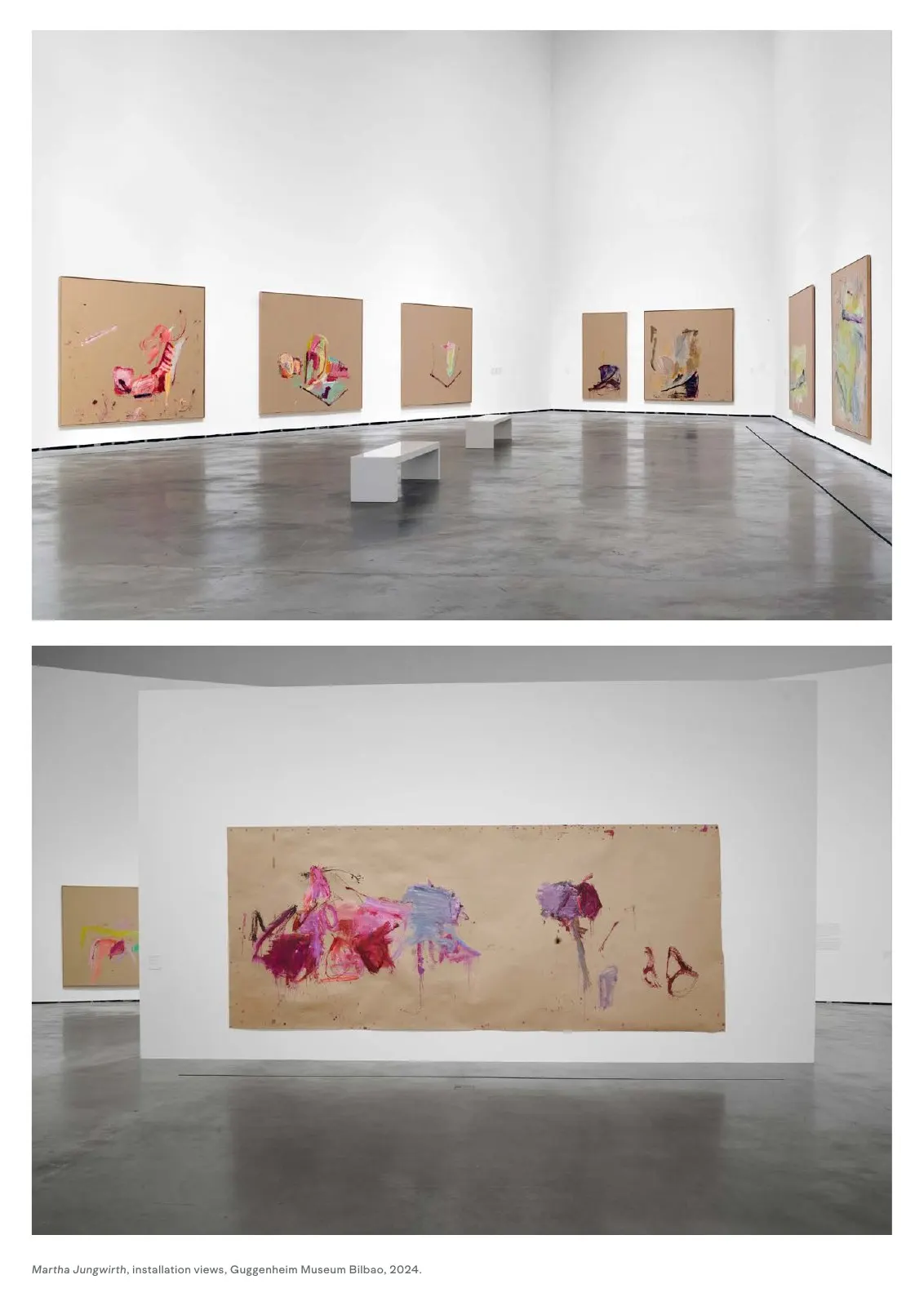
Martha Jungwirth Untitled, 2025 (detail) Oil on board 31.8 x 40.9 cm (12.52 x 16.1 in) (MJ 1575)
Source text · Page 12
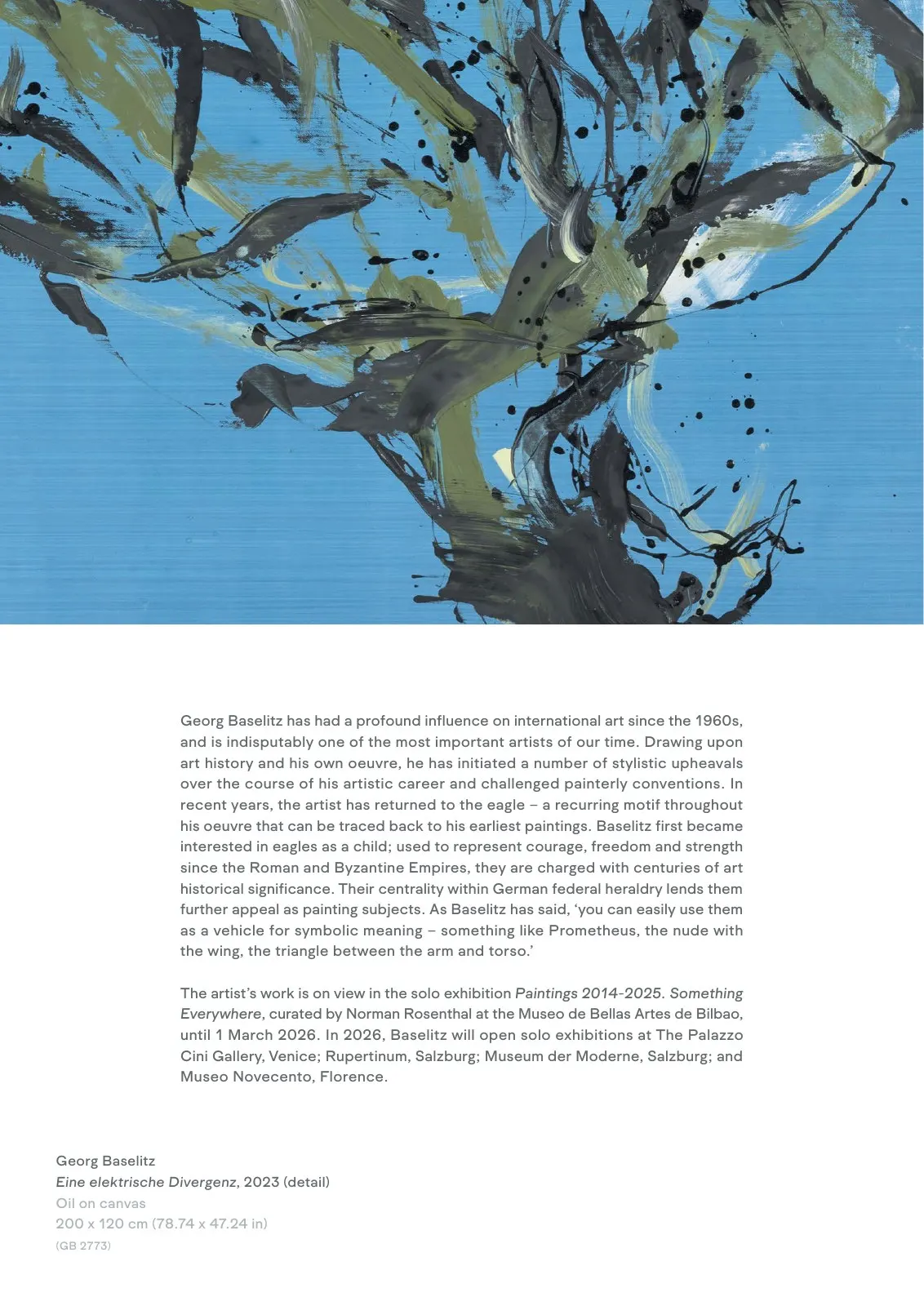
One of the most celebrated painters of his generation, Adrian Ghenie fuses the profoundly personal with the art historical in his dynamic oeuvre, while bridging principles of abstraction and representation. He engages not only with the history of painting, but with what he describes as ‘painting the texture of history’ – frequently depicting the figures whose actions have defined its course. Painted in 2010, Self Portrait No. 3 is an early self-portrait in Ghenie’s oeuvre, and a rare work in which the artist is immediately recognisable. Unlike the majority of his self-portraits, which hybridise the artist’s physiognomy with that of figures including Vincent van Gogh, Charles Darwin, Joseph Stalin and even a monkey, here Ghenie is unmasked, presenting simply as himself. The work captures a pivotal moment in the artist’s practice, as principles of anatomical likeness break down and mutate into a dynamic abstract language of daubs, streaks and smears. Corporeal forms emerge from textured layers of red, purple, mauve and pink paint that are, in some areas, built into impasto, and in others, scraped back with a palette knife. ‘Once you leave the traditional constraints of anatomy behind, the way you deform can become a portrait of character or the inner psyche,’ Ghenie says. Through this rich material interrogation, Ghenie’s works function as records not only of their specific subject matter, but of the act of art-making itself. Klaus Albrecht Schröder, art historian and director of the Albertina in Vienna at the time of the artist’s major exhibition Adrian Ghenie: Shadow Paintings in 2024, argues that the self-portrait is not simply an essential element of Ghenie’s practice; rather, Ghenie’s entire oeuvre functions as ‘one single, monumental self-portrait’, with each painted figure operating as a form of self-thematisation. ‘Ghenie’s concern is not extended introspection but the self-recognition that catches you unawares: from one moment to the next,’ he writes. ‘Nothing is more uncanny than this suddenness of self-recognition. In these rare moments, we encounter ourselves as a stranger for the first time: a grotesque alien, an ugly monster.’ Adrian Ghenie Self Portrait, No. 3 , 2010 Oil on canvas 46 x 34 cm (18.11 x 13.39 in) (ADG 1113)
Source text · Page 17
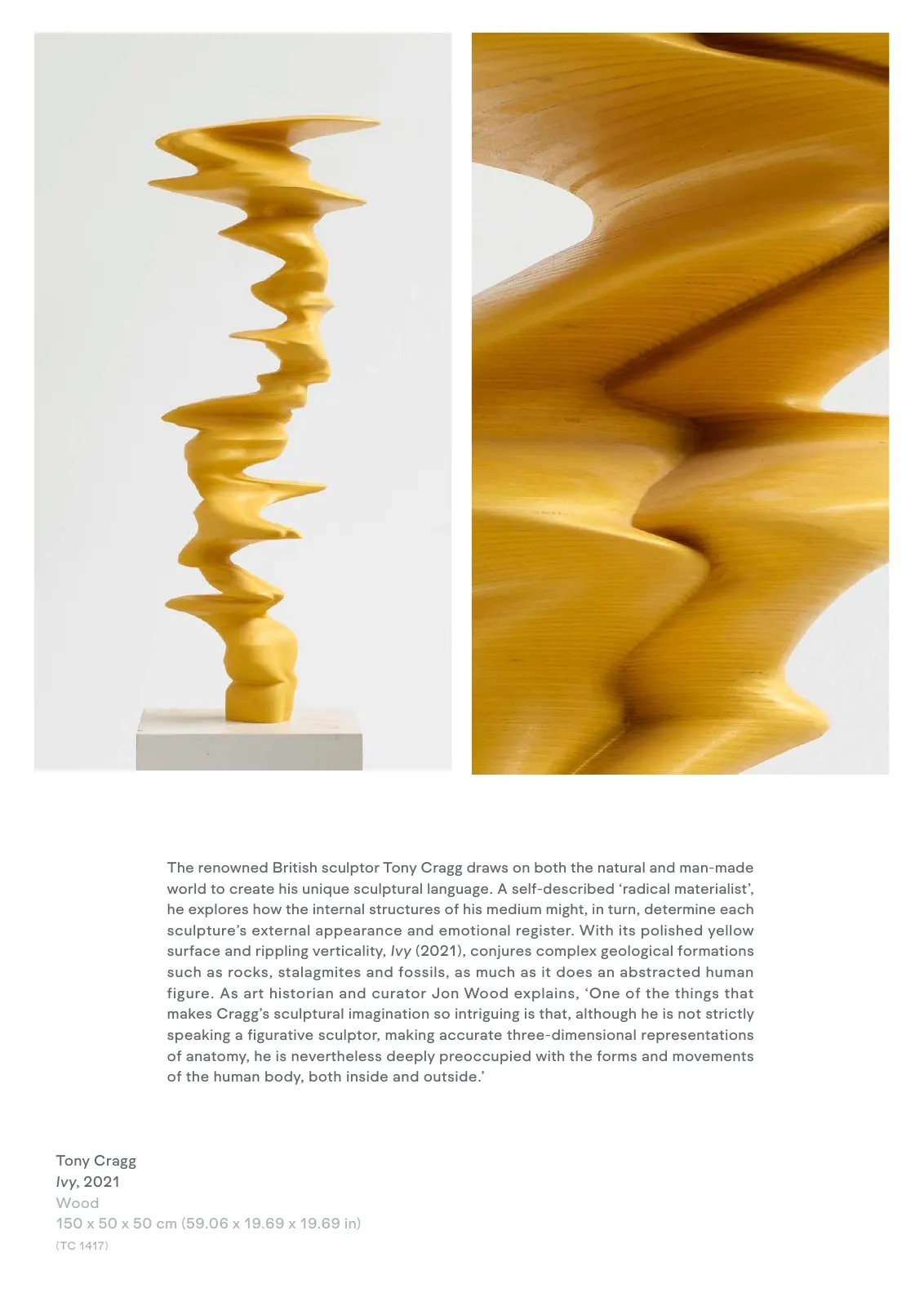
Martha Jungwirth Untitled, 2025 Watercolour on paper 137.5 x 104 cm (54.13 x 40.94 in) (MJ 1565)
Source text · Page 22
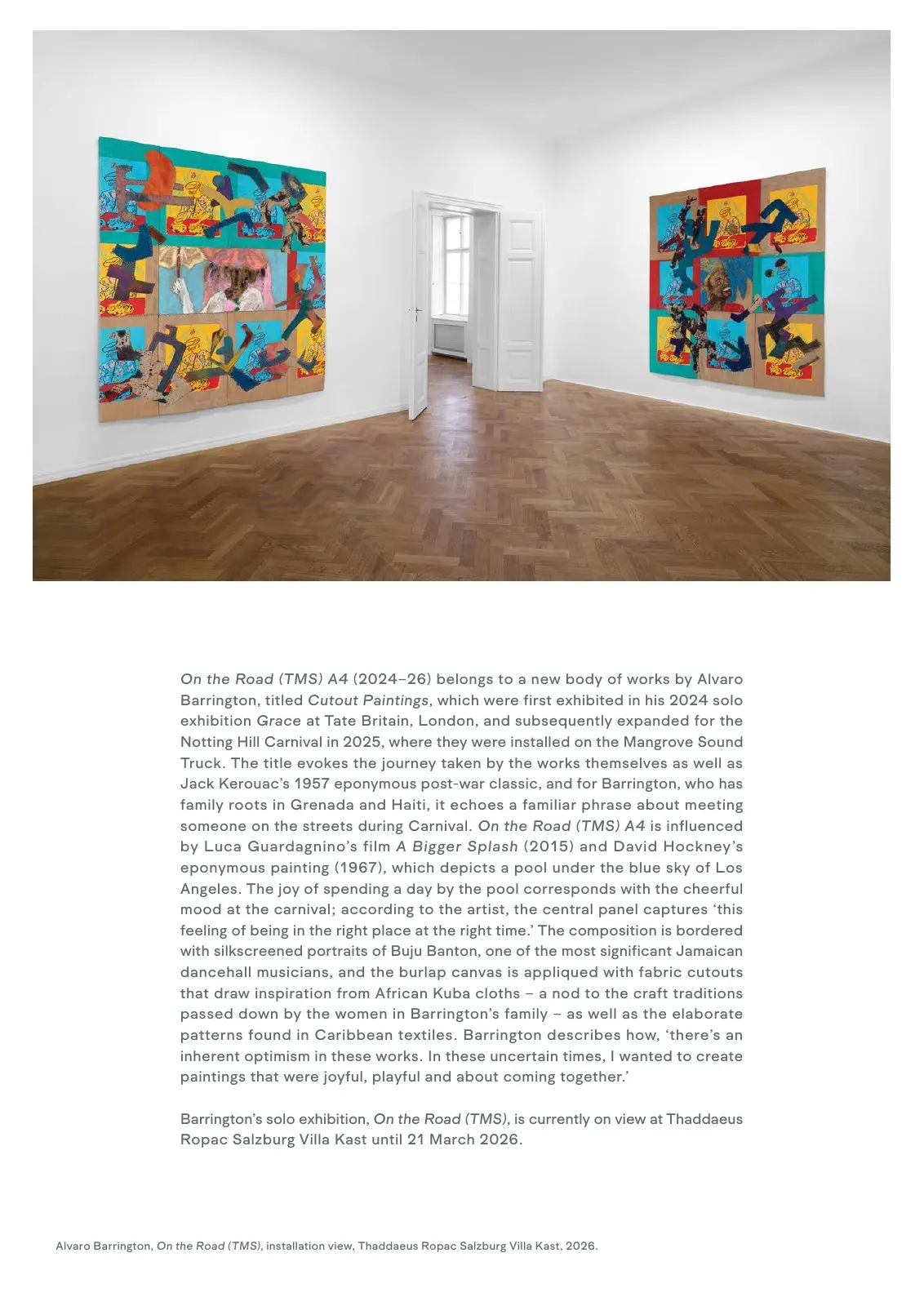
Robert Rauschenberg Duet [Anagram (A Pun)], 1998 Inkjet pigment transfer on polylaminate 256.4 x 154.9 cm (97 x 61 in) (RR 1386)
Source text · Page 28
Daniel Richter Fidel unter Bäumen zu dritt , 2025 Oil on canvas 270 x 200 cm (106.3 x 78.74 in) (DAR 1260)
Source text · Page 33
Alvaro Barrington On the Road (TMS) A4, 2024-26 Oil, acrylic, Flashe and enamel on burlap / silk screen printed burlap, cotton linen and waxed cotton thread 230 x 201 cm (90.55 x 79.13 in) (ABA 1419)
Source text · Page 39
Joan Snyder Howl/Heart, 2011 (detail) Oil, acrylic, dried flowers and glass beads on linen 63.5 x 152.4 cm (25 x 60 in) (JSN 1200) Fuelling abstraction with autobiography, Joan Snyder consciously worked against the male-dominated conventions of Minimalism, Abstract Expressionism and Colour Field painting, which were prevalent in the New York art scene into which she emerged. ‘I wanted more in painting, not less,’ she says. ‘I wanted to tell a story, have a beginning, a middle, an end... to do something else, something much more intense, personal and complex.’ The result is a poetic body of work that breaks down social, aesthetic and material hierarchies to assert the place of female subjectivity in abstraction. In Howl/Heart (2011), Snyder leaves passages of the canvas open, juxtaposing the natural texture of the linen with the complex, collaged materiality of encrusted paint, dried flowers and glass beads which she layers on the surface. White paint is applied generously in horizontal swathes, the visible strokes gesture to her earlier Stroke paintings that garnered her critical acclaim in the 1970s. Drips of paint trail down the surface, bleeding into a scattering of personal motifs – roses, lips, hearts, berries and vulvas – which Snyder builds in tones of ochre, magenta and vermillion. Scrawling the words ‘howl’, ‘heart’ and ‘sky’ in violet across the canvas, Snyder utilises text as an expressive tool that traverses the gulf between language and image: the words capture fragments of her voice and, existing beyond referential meaning, constitute another type of abstract and embodied mark-making.
Source text · Page 44
Martha Jungwirth Untitled, 2025 Oil on paper on canvas 65 x 90.5 cm (25.59 x 35.63 in) (MJ 1569) My pictorial reality is charged with passion, a language tied to the body, to dynamic movement. Painting is a matter of form, and then it receives a soul – through me. — Martha Jungwirth
Source text · Page 49
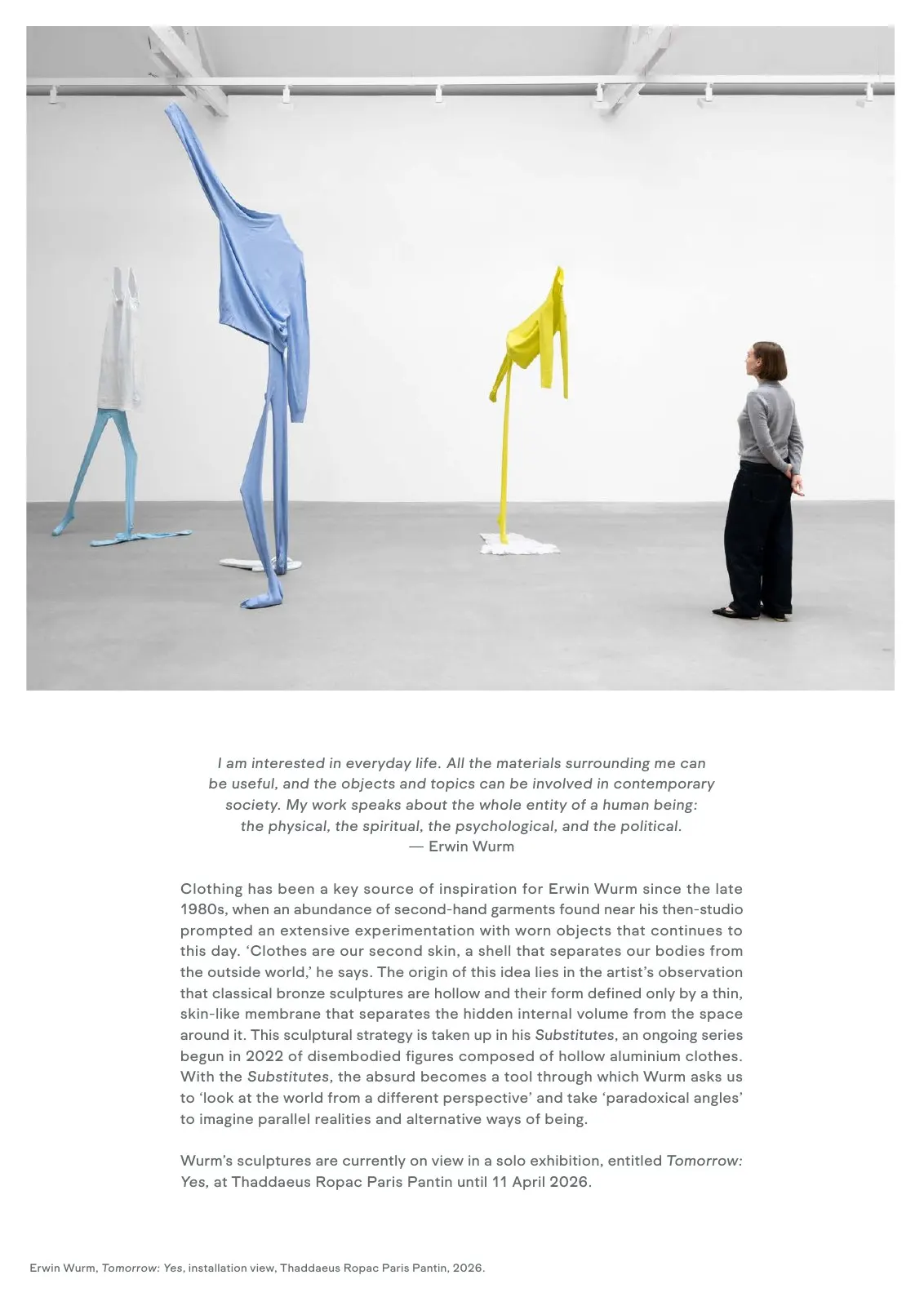
Erwin Wurm Blue Bird (Substitutes) , 2025 Aluminium, acrylic paint 326 x 140 x 121 cm (128.35 x 55.12 x 47.64 in) Edition of 3 + 2 (EW 2133)
Source text · Page 55
Robert Mapplethorpe Fireplace with Flowers , 1986 Silver print 50.8 x 61 cm (20 x 24 in) Edition of 10 (RMP 2349)
Source text · Page 60
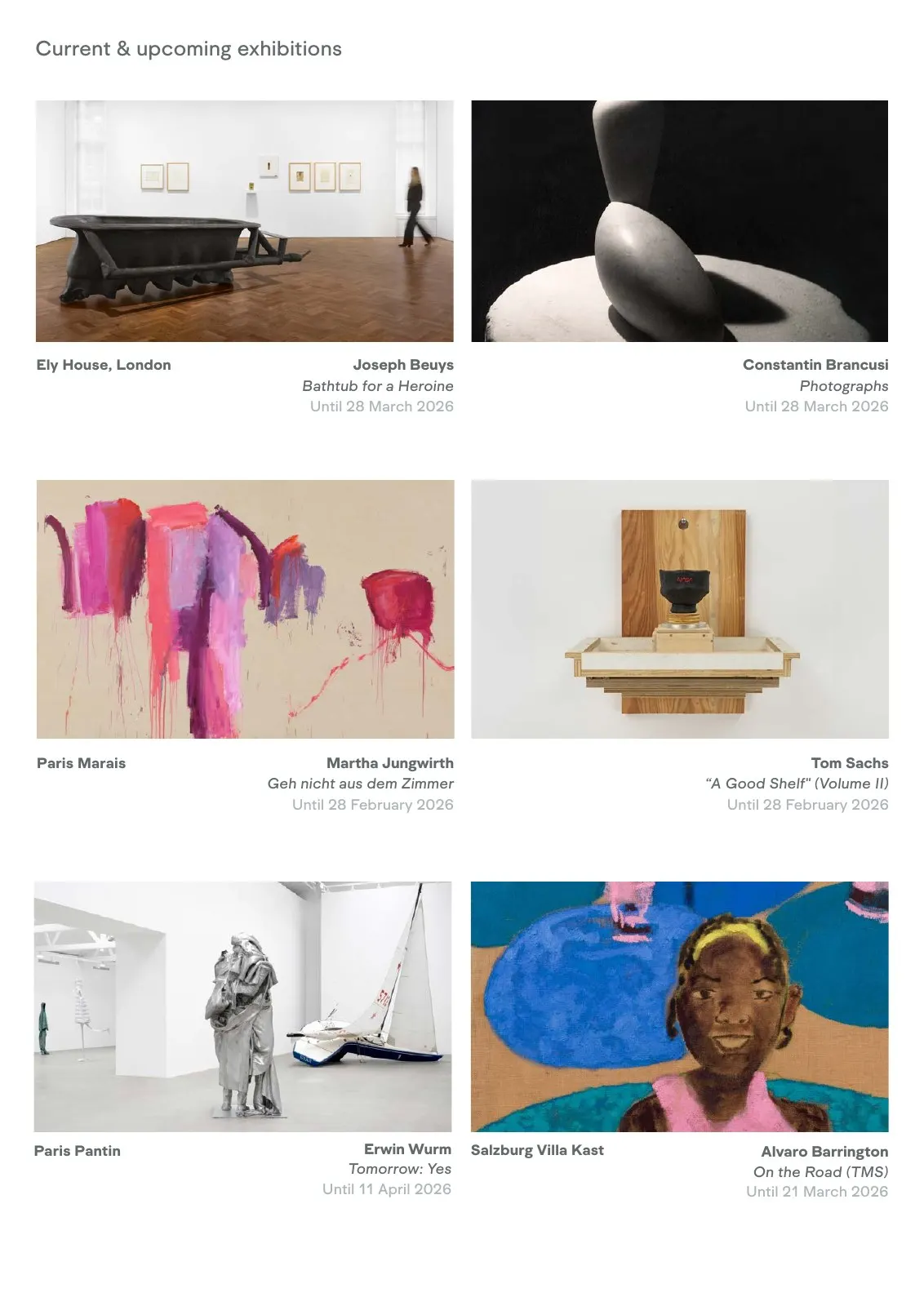
Current & upcoming exhibitions Seoul Fort Hill Distancing Group show 24 February—2 May 2026 Milan VALIE EXPORT & KETTY LA ROCCA BODY SIGN Until 28 February 2026